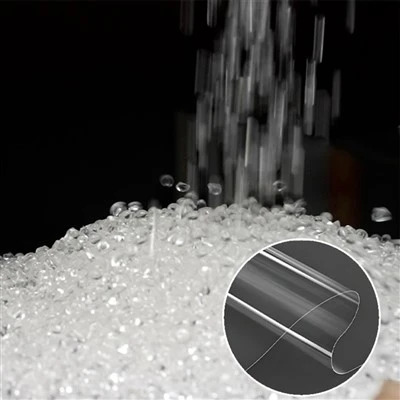


Hey there! As a polyether TPU supplier, I often get asked about how our polyether TPU performs at high temperatures. Well, let's dive right into it and explore this topic in detail.
Understanding Polyether TPU
First off, let's talk about what polyether TPU is. TPU stands for thermoplastic polyurethane, and polyether TPU is a specific type. It's known for its excellent flexibility, abrasion resistance, and chemical resistance. It's used in a wide range of applications, from Polyether TPU for Film to Polyether Extrusion TPU.
High - Temperature Performance
Melting Point and Heat Deflection Temperature
One of the key factors in determining how a material performs at high temperatures is its melting point. Polyether TPU has a relatively high melting point compared to some other plastics. This means that it can withstand higher temperatures before it starts to melt and lose its shape.
The heat deflection temperature (HDT) is another important aspect. HDT is the temperature at which a material will deform under a specified load. Polyether TPU has a decent HDT, which allows it to maintain its structural integrity in moderately high - temperature environments. For example, in applications like TPU for Casting Film, where the film may be exposed to some heat during the casting process, the polyether TPU can handle the heat without significant distortion.
Thermal Stability
Polyether TPU also exhibits good thermal stability. Thermal stability refers to the ability of a material to resist degradation when exposed to heat over a period of time. Polyether TPU doesn't break down easily at higher temperatures, which is crucial in applications where long - term exposure to heat is a possibility.
However, it's important to note that extreme heat can still have an impact. If the temperature gets too high for an extended period, the polyether TPU might start to experience some changes in its physical and chemical properties. For instance, it could become more brittle, which would reduce its flexibility and impact resistance.
Oxidation Resistance
At high temperatures, oxidation can be a problem for many materials. Oxidation can cause the material to degrade, lose its strength, and change color. Polyether TPU has a certain level of oxidation resistance. This is due to the chemical structure of polyether, which is more resistant to oxidation compared to some other types of polymers.
In real - world applications like Blown Film TPU and Blown Film TPU Material, where the film may be exposed to heat during the blowing process and then to the environment, the oxidation resistance of polyether TPU helps to ensure the long - term quality of the film.


Applications at High Temperatures
There are several applications where polyether TPU's performance at high temperatures is put to the test.
Automotive Applications
In the automotive industry, polyether TPU is used in various components that are exposed to high temperatures. For example, it can be used in gaskets and seals. These parts need to maintain their shape and sealing properties even when the engine is running hot. Polyether TPU's high melting point and thermal stability make it a suitable choice for such applications.
Electrical and Electronics
In electrical and electronics, polyether TPU can be used in cable insulation. Cables can generate heat during operation, and the insulation material needs to be able to withstand this heat without breaking down. The good heat resistance of polyether TPU ensures that the cables remain safe and functional.
Factors Affecting High - Temperature Performance
- Additives: The addition of certain additives can improve the high - temperature performance of polyether TPU. For example, heat stabilizers can be added to enhance thermal stability and reduce the rate of oxidation at high temperatures.
- Molecule Structure: The molecular structure of the polyether TPU can also affect its high - temperature performance. A more ordered and stable molecular structure generally leads to better heat resistance.
How Our Polyether TPU Compares
As a supplier, I'm proud to say that our polyether TPU has been carefully formulated to offer excellent high - temperature performance. We've conducted a lot of tests to ensure that it meets the requirements of various industries.
Compared to some other polyether TPU products on the market, our material has a better balance between flexibility and heat resistance. This means that it can maintain its flexibility even at relatively high temperatures, which is a significant advantage in applications where both properties are needed.
Conclusion
In conclusion, polyether TPU performs quite well at high temperatures thanks to its high melting point, decent heat deflection temperature, thermal stability, and oxidation resistance. It has a wide range of applications in industries that require materials to withstand heat.
If you're in the market for high - quality polyether TPU for your high - temperature applications, don't hesitate to get in touch for a more in - depth discussion and possible procurement. We can offer you detailed information about our products and how they can meet your specific needs.
References
- Smith, J. (2020). "Thermoplastic Polyurethanes: Properties and Applications". Journal of Plastics Science.
- Johnson, A. (2019). "Heat Resistance of Polymeric Materials". Polymer Research.