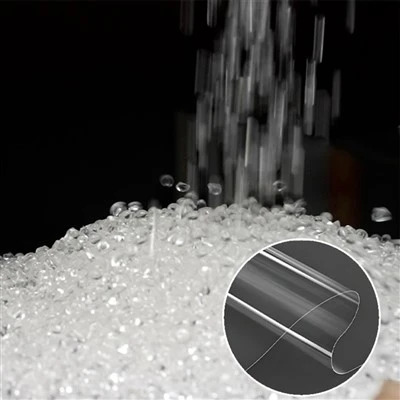


Thermoplastic Polyurethane Resin (TPU) has become a popular material in various industries due to its excellent properties such as high abrasion resistance, flexibility, and good mechanical strength. As a TPU supplier, I am often asked about how TPU is processed. In this blog post, I will delve into the different processing methods of TPU, providing you with a comprehensive understanding of this versatile material.
1. Understanding TPU
TPU is a type of polymer that combines the properties of rubber and plastic. It is made by reacting diisocyanates with polyols and chain extenders. The resulting material can be processed using a variety of methods, making it suitable for a wide range of applications, from automotive parts to consumer goods.
2. Preparation of TPU for Processing
Before processing, TPU usually comes in the form of pellets or granules. These pellets need to be properly dried to remove any moisture. Moisture in TPU can cause problems during processing, such as foaming, reduced mechanical properties, and poor surface finish. The drying temperature and time depend on the type of TPU, but typically, TPU pellets are dried at a temperature between 80 - 100°C for 2 - 4 hours.
3. Processing Methods of TPU
Injection Molding
Injection molding is one of the most common methods for processing TPU. It is suitable for producing complex-shaped parts with high precision and repeatability. The process involves the following steps:
- Melting: The dried TPU pellets are fed into the hopper of an injection molding machine. The pellets are heated in the barrel of the machine until they reach a molten state. The melting temperature of TPU varies depending on its hardness and formulation, usually ranging from 180 - 230°C.
- Injection: Once the TPU is molten, a screw in the barrel pushes the molten material into the mold cavity under high pressure. The pressure ensures that the TPU fills the entire mold cavity, taking the shape of the mold.
- Cooling and Ejection: After the mold cavity is filled, the TPU is allowed to cool and solidify. The cooling time depends on the thickness of the part and the mold design. Once the TPU has solidified, the mold opens, and the part is ejected.
Injection molding is widely used for producing parts such as Injection TPU New Materials, which are used in various industries due to their high performance and excellent surface finish.


Extrusion
Extrusion is another important processing method for TPU. It is used to produce continuous products such as tubes, sheets, and profiles. The extrusion process consists of the following steps:
- Feeding: Similar to injection molding, dried TPU pellets are fed into the hopper of an extruder.
- Melting and Compression: The pellets are heated and melted as they pass through the barrel of the extruder. A screw in the barrel compresses and transports the molten TPU towards the die.
- Shaping: The molten TPU is forced through a die, which gives it the desired shape. For example, a circular die can be used to produce tubes, while a flat die can be used to produce sheets.
- Cooling: After exiting the die, the TPU is cooled using water or air to solidify it. The cooling rate can affect the properties of the final product, such as its crystallinity and mechanical strength.
Extruded TPU products, such as TPU Pellets 85a for Air Hoses, are known for their excellent flexibility and resistance to abrasion and chemicals.
Blow Molding
Blow molding is a method used to produce hollow parts, such as bottles and containers. The process of blow molding TPU involves the following steps:
- Parison Formation: A parison, which is a tube of molten TPU, is extruded or injection - molded.
- Molding: The parison is placed in a mold cavity. Air is then blown into the parison, causing it to expand and take the shape of the mold.
- Cooling and Ejection: After the TPU has cooled and solidified, the mold opens, and the part is ejected.
Blow - molded TPU products are used in applications where flexibility, durability, and a hollow structure are required.
Calendering
Calendering is a process used to produce thin sheets or films of TPU. The process involves passing the molten TPU between a series of heated rollers. The rollers press and shape the TPU, reducing its thickness and improving its surface finish. The calendered TPU sheets can be used in applications such as automotive interiors, packaging, and textiles.
4. Post - Processing of TPU
After the initial processing, TPU parts may undergo post - processing operations to improve their properties or appearance. Some common post - processing methods include:
- Annealing: Annealing is a heat - treatment process that can reduce internal stresses in TPU parts, improve their dimensional stability, and enhance their mechanical properties. The parts are heated to a specific temperature below their melting point and then cooled slowly.
- Surface Treatment: Surface treatment can be used to improve the adhesion, friction, or appearance of TPU parts. Methods such as coating, printing, and laser engraving can be applied to the surface of the parts.
5. Applications of Processed TPU
Processed TPU has a wide range of applications in different industries:
- Footwear: TPU Resin for Shoe Outsoles is used because of its high abrasion resistance, flexibility, and good traction. It provides durability and comfort in shoes.
- Automotive: TPU is used in automotive interiors and exteriors for parts such as seals, gaskets, and airbags. TPU Granule for Seals offers excellent sealing performance and resistance to automotive fluids.
- Electronics: High Transparent TPU for Electronics is used in electronic devices for its transparency, flexibility, and protection against dust and moisture.
6. Quality Control in TPU Processing
Quality control is crucial in TPU processing to ensure that the final products meet the required standards. Some key aspects of quality control include:
- Raw Material Inspection: The TPU pellets should be inspected for purity, moisture content, and particle size distribution before processing.
- Process Parameter Monitoring: During processing, parameters such as temperature, pressure, and speed should be monitored and controlled to ensure consistent quality.
- Final Product Testing: The final TPU products should be tested for mechanical properties, such as tensile strength, elongation, and hardness, as well as for other properties like chemical resistance and surface finish.
Contact for Purchasing
If you are interested in purchasing TPU products for your business, we are here to provide you with high - quality TPU materials. Our products are processed with strict quality control to meet your specific requirements. Feel free to contact us to start a discussion about your TPU needs.
References
- "Handbook of Thermoplastic Elastomers" by Mario Goyanes.
- "Polyurethane Handbook" by G. Oertel.
- Technical literature from TPU manufacturers.
In conclusion, the processing of TPU involves a series of well - defined steps, from preparation to post - processing. Understanding these processes can help you better choose the right TPU products for your applications. If you have any questions about TPU processing or our products, please don't hesitate to reach out.