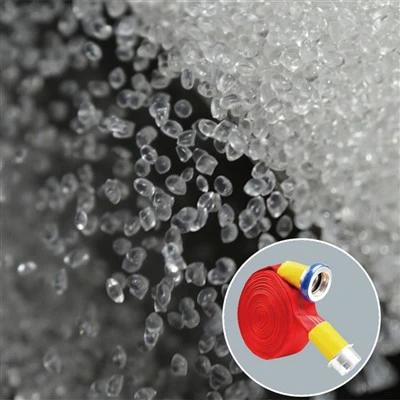


As a Blown Film TPU supplier, I often get asked about the raw materials needed for Blown Film TPU production. In this blog, I'm gonna break down these essential raw materials, explain their roles, and give you some insights into how they affect the final product.
1. Thermoplastic Polyurethane (TPU) Resin
The core raw material for Blown Film TPU production is, of course, the TPU resin itself. TPU is a versatile polymer that combines the properties of rubber and plastic. It's known for its high elasticity, abrasion resistance, and good mechanical properties.Our singbon TPU performes well in this application.
There are different types of TPU resins such as polyester tpu, polyether tpu, and the choice depends on the specific requirements of the blown film. For example, Polyether Extrusion TPU is a popular option. Polyether-based TPU has excellent hydrolysis resistance, which means it can withstand the effects of water and moisture over time. This is crucial for applications where the film may be exposed to wet environments.
The molecular weight of the TPU resin also plays a significant role. Higher molecular weight TPU generally results in films with better mechanical strength and toughness. However, it may also have higher viscosity, which can make the extrusion process more challenging. So, we need to find a balance based on the desired film properties and the capabilities of our production equipment.
2. Polyols
Polyols are one of the key building blocks in TPU synthesis. They are long-chain polymers with multiple hydroxyl groups. There are two main types of polyols used in TPU production: polyether polyols and polyester polyols.
Polyether polyols are commonly used in Blown Film TPU because they offer good flexibility, low-temperature performance, and hydrolysis resistance. The Polyether TPU for Film often utilizes polyether polyols to achieve these desirable properties. Polyester polyols, on the other hand, provide excellent mechanical properties and chemical resistance but may have lower hydrolysis resistance compared to polyether polyols.
The choice between polyether and polyester polyols depends on the end-use application of the blown film. For example, if the film is going to be used in outdoor applications where it may be exposed to rain and humidity, polyether polyols would be a better choice. But if the film needs to withstand chemical exposure in an industrial setting, polyester polyols might be more suitable.
3. Diisocyanates
Diisocyanates are another essential component in TPU production. They react with the polyols to form the urethane linkages that give TPU its unique properties. The most commonly used diisocyanates in TPU production are methylene diphenyl diisocyanate (MDI) and toluene diisocyanate (TDI).
MDI is widely used in Blown Film TPU because it offers good reactivity, resulting in a more uniform and stable TPU structure. It also provides better mechanical properties and heat resistance compared to TDI. However, the choice between MDI and TDI also depends on factors such as cost, processing requirements, and the specific properties needed for the final film.
4. Chain Extenders
Chain extenders are small molecules that react with the TPU prepolymer to increase the molecular weight and improve the mechanical properties of the TPU. Common chain extenders include 1,4-butanediol (BDO) and ethylene glycol (EG).
BDO is a popular choice for Blown Film TPU production because it can enhance the hardness, tensile strength, and abrasion resistance of the film. The amount of chain extender used can be adjusted to control the final properties of the TPU. For example, increasing the proportion of chain extender can result in a harder and more rigid film, while decreasing it can produce a softer and more flexible film.
5. Additives
In addition to the main components, various additives are often used in Blown Film TPU production to improve specific properties of the film.
Antioxidants
Antioxidants are added to prevent the oxidation of the TPU during processing and use. Oxidation can cause the film to degrade, resulting in a loss of mechanical properties and discoloration. Phenolic antioxidants are commonly used in TPU films because they are effective in preventing oxidation and have good compatibility with the TPU matrix.
Lubricants
Lubricants are used to reduce the friction between the TPU and the processing equipment during extrusion. This helps to improve the flow of the TPU and prevent it from sticking to the die or other surfaces. Common lubricants include fatty acid esters and waxes.
UV Stabilizers
If the blown film is going to be used outdoors, UV stabilizers are essential to protect it from the harmful effects of ultraviolet radiation. UV radiation can cause the TPU to degrade, resulting in a loss of mechanical properties and color fading. Hindered amine light stabilizers (HALS) are often used in TPU films to provide long-term protection against UV radiation.
Anti-blocking Agents
Anti-blocking agents are added to prevent the film from sticking to itself when it is wound up or stored. These agents create a micro-roughness on the surface of the film, reducing the contact area between adjacent layers and preventing them from sticking together. Silica-based anti-blocking agents are commonly used in Blown Film TPU.
6. Impact of Raw Materials on Film Quality
The quality of the raw materials used in Blown Film TPU production has a significant impact on the final properties of the film. For example, using a high-quality TPU resin with a consistent molecular weight distribution can result in a film with more uniform mechanical properties. Similarly, the choice of polyols and diisocyanates can affect the film's flexibility, hydrolysis resistance, and chemical resistance.
The additives also play a crucial role in determining the film's performance. Using the right amount of antioxidants can extend the film's service life, while the appropriate anti-blocking agents can ensure smooth handling and storage of the film.


7. Our Offerings
As a Blown Film TPU supplier, we offer a range of Blown Film TPU Material that are carefully formulated using high-quality raw materials. Our High Moisture Blown Film Type TPU is designed for applications where the film needs to withstand high humidity environments. We also have TPU for Casting Film for those who require a different type of film production process.
If you're in the market for Blown Film TPU, we'd love to have a chat with you. Whether you're looking for a standard product or need a custom formulation, we have the expertise and resources to meet your needs. Contact us to start a discussion about your specific requirements and let's work together to find the best solution for your project.
References
- "Thermoplastic Polyurethanes: A Comprehensive Review" - Journal of Polymer Science
- "Polyurethane Handbook" by G. Oertel
So, that's a wrap on the raw materials needed for Blown Film TPU production. If you have any questions or want to learn more, don't hesitate to reach out. Looking forward to hearing from you!